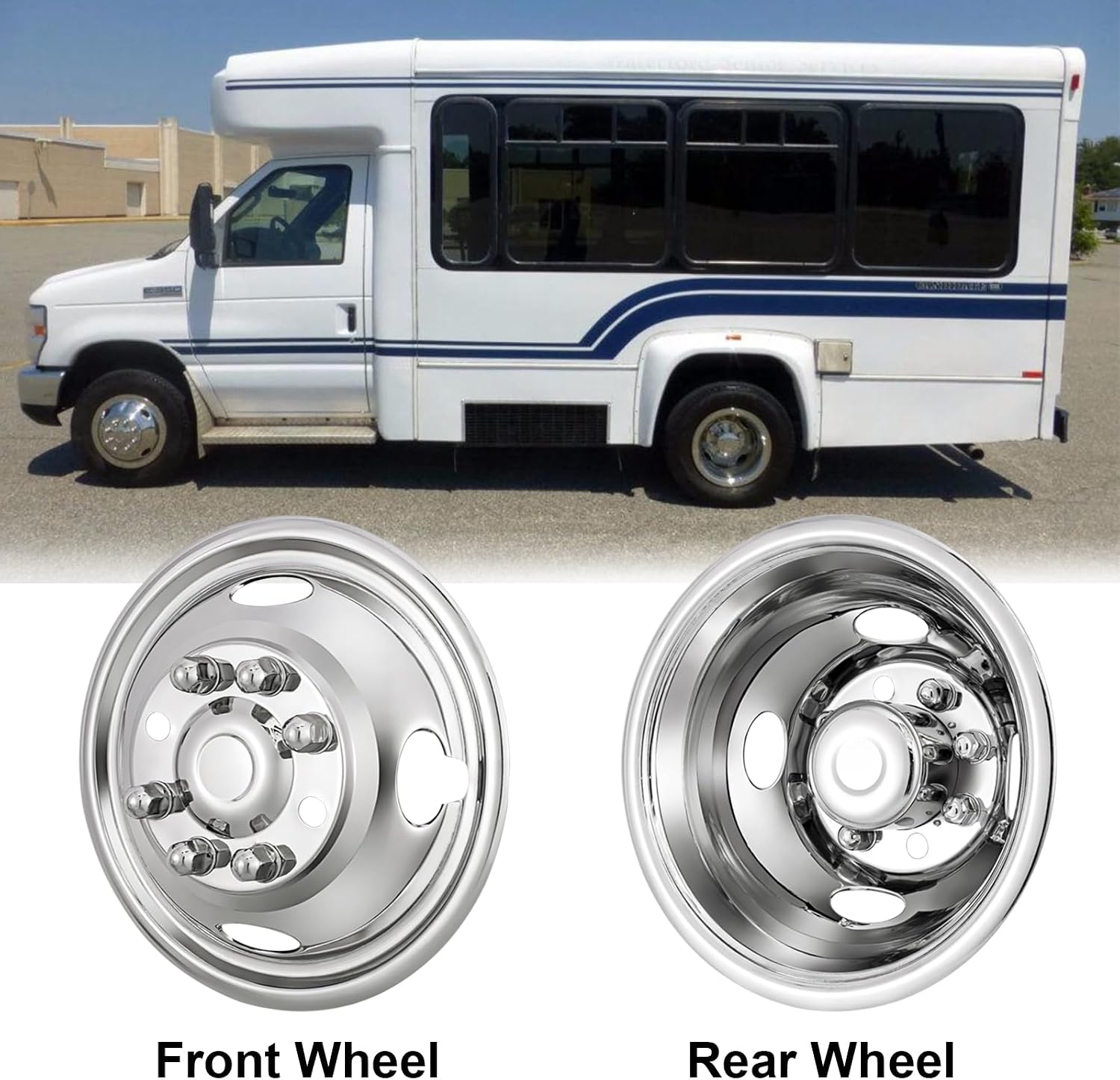
If you’ve ever looked at a truck sitting on dull steel wheels and thought something’s missing — you already understand the appeal of wheel covers. A wheel cover (also called a hubcap) is a decorative disk that snaps or bolts over the face of a wheel, covering the lug nuts and the center area to give the whole wheel assembly a finished, polished look. Chrome wheel covers take that one step further: they use a bright, mirror-like metallic finish — think of it as the automotive equivalent of dress shoes instead of work boots. For trucks and SUVs especially, the right chrome cover can transform an everyday work vehicle into something that turns heads in a parking lot or on the show floor. What’s less obvious is that there’s an enormous gap between a $30 replacement hubcap from an auto parts store and a $400-per-corner show-quality chrome cover — and if you’re mid-decision right now, the differences matter a lot more than the price tag alone suggests.
This guide is built for buyers who are past the “what even is this” stage. You know the category. You’re weighing a real purchase — maybe a set for your Silverado, your Escalade, or a Navigator you’re prepping for the show circuit — and you need a decision framework, not a sales pitch. Let’s get into it.
| EDITOR'S PICK4 Piece Set 16" 8 Lug RV Dual C… | Mid-tier[Chevy Chrome Tire Wheel Skin Ri…](https://www.amazon.com/dp/B01MSK9ZK5?tag=greenflower20-20) | Budget pick[BDK 16 Inch Hubcaps Set of 4 -…](https://www.amazon.com/dp/B08Z6D9HTM?tag=greenflower20-20) | |
|---|---|---|---|
| Fit type | Dual simulator | Hub cap | Snap-on |
| Material | Chrome | Chrome | ABS |
| Bolt pattern | 8 lug | 8 lug | — |
| Color | Chrome | Chrome | Silver & Gunmetal |
| Price | $99.34 | $85.10 | $37.70 |
| See on Amazon → | See on Amazon → | See on Amazon → |
The Two Tiers, Defined Plainly
The market breaks cleanly into two functional categories, and conflating them is the most common source of buyer regret in this segment.
OEM-Replacement Covers
OEM-replacement covers are designed to mimic the appearance of factory-issued wheel covers. They’re typically ABS plastic with a vacuum-metallized chrome-look finish — the chrome effect comes from a thin metal film deposited on the plastic, not from actual electroplated metal. They clip onto an existing steel wheel using a retention ring or snap clips. Fitment is wheel-diameter-specific (16”, 17”, and 18” are the most common truck sizes) and often bolt-pattern-agnostic — they cover over the lug nuts entirely. Brands in this tier include Dorman and Pilot Automotive, and retail typically runs $15–$80 per set of four. According to Tire Rack’s wheel cover fitment guide for full-size trucks and SUVs, these covers are appropriate for daily-driver restoration: getting a fleet van, a rental return, or a work truck back to a presentable stock appearance at minimum cost.
BDK
$37.70
In stock on Amazon
Check price on AmazonMid-Range Electroplated Chrome Covers
Mid-range chrome covers are a meaningful step up. These are rigid assemblies — typically an ABS substrate with genuine triple-layer electroplated chrome — designed to bolt onto aftermarket or OEM alloy wheels using a center cap interface. Brands like DUB and Lexani offer strong representation in this tier, with per-set pricing from roughly $200 to $500 for the cover assembly alone, before the underlying wheel. Finish quality is show-ready for regional events, with the consistent caveat in buyer reviews that electroplated chrome requires dedicated maintenance — chrome polish, no abrasive washing — to hold its mirror depth through multiple seasons. This tier bridges daily presentability and weekend-show credibility without requiring a full show-circuit budget.
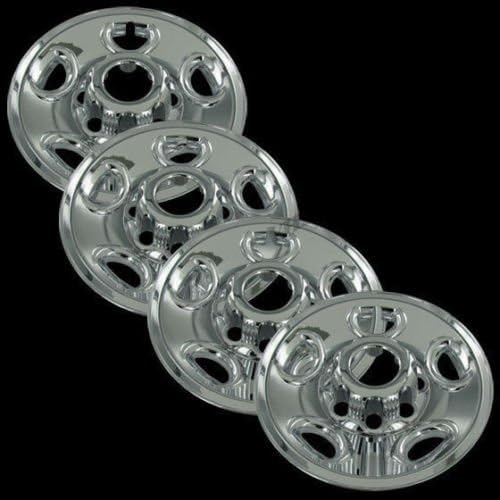
Chevy
$85.10
In stock on Amazon
Check price on AmazonShow-Quality Billet and Full Floater Covers
Show-quality chrome covers are a different product category altogether. These are rigid metal assemblies — in the higher tiers, fully billet-machined aluminum faces with deep electroplated chrome or polished billet finish — designed to bolt onto aftermarket or OEM alloy wheels. They may include spinner inserts (independently rotating center caps that continue to spin when the vehicle stops, the signature feature of the spinner-wheel genre), floater badges, or full-face designs that replace the visible portion of the wheel entirely. Brands like DUB’s upper catalog, Lexani’s show line, and Wheel Pros operate here, with per-wheel pricing from $150 to $500+ for the cover assembly alone. Low Rider Magazine’s 2024 feature “Floater Builds and the New Chrome Standard” notes that show-circuit competitors routinely invest $1,800–$3,500 in chrome cover and floater packages for a single vehicle, treating the wheel face as a primary display surface comparable to a custom paint job. The practical distinction from the tiers above: an OEM replacement cover is a consumable; a show-quality chrome cover is a build component.
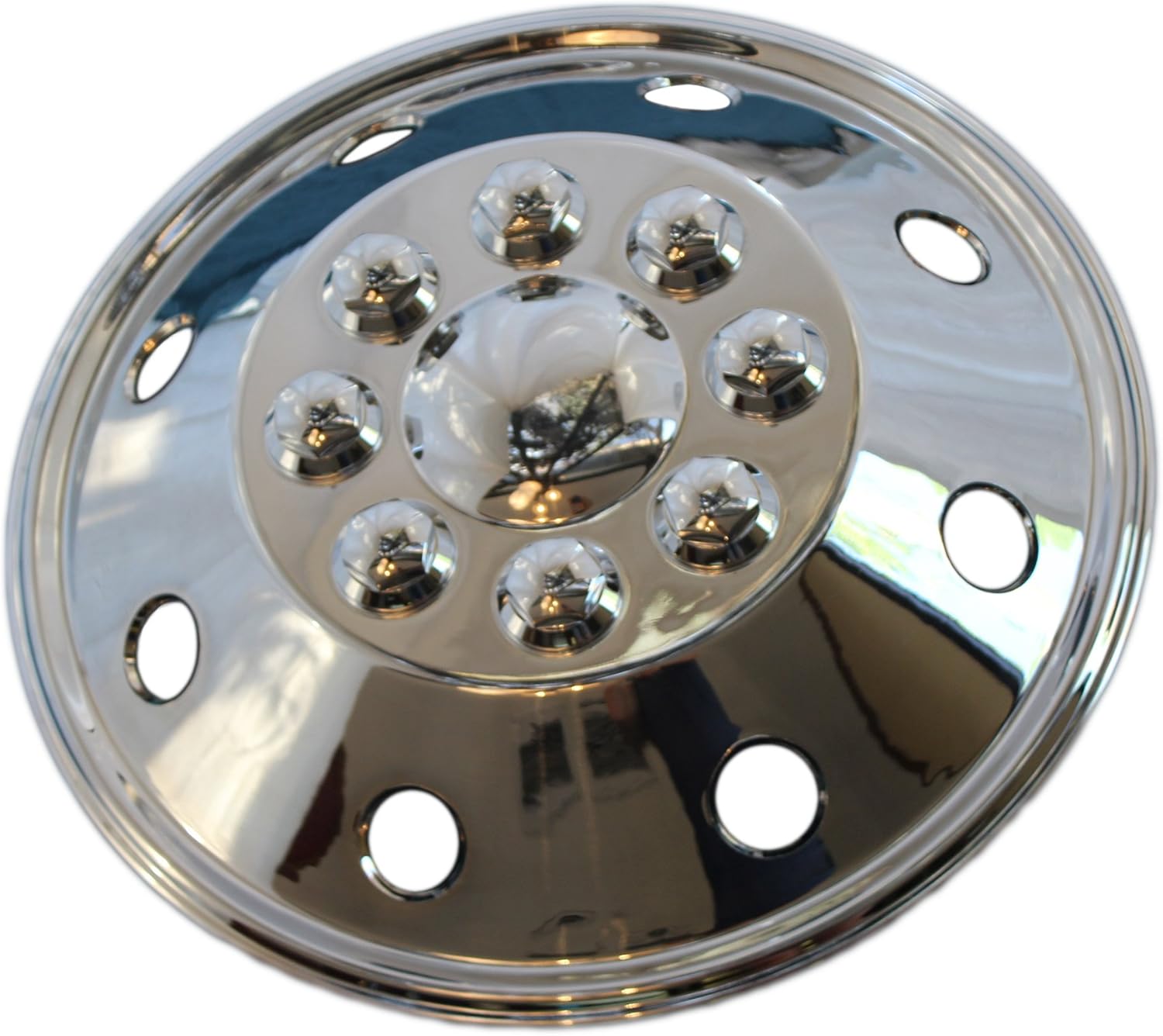
4
$99.34
In stock on Amazon
Check price on AmazonFitment Variables That Actually Break Deals
This is where intermediate buyers most commonly get burned, so let’s be specific.
Bolt pattern and center bore. OEM-replacement covers that snap onto steel wheels don’t interact with bolt pattern — they cover over the lugs. Show-quality covers that bolt on do interact with bolt pattern, and some designs require access to the lug holes for installation. Before ordering anything in the $150+ tier, confirm the bolt pattern (expressed as the number of lugs × the circle diameter in millimeters — for example, 6×139.7 is the most common full-size GM truck pattern) and the center bore (the diameter of the hole in the wheel center, measured in millimeters). Hot Rod Magazine’s 2024 explainer “Hub Rings, Hub Centric vs. Lug Centric: The Real Difference” points out that mismatched center bore is one of the top causes of vibration in aftermarket wheel installations — and that’s equally true of cover assemblies that integrate with the center cap area.
TPMS clearance. Tire pressure monitoring sensors — the components inside your wheels that warn you when a tire is going low — are mandatory on all U.S. passenger vehicles built after 2008 per federal regulation. Many chrome cover assemblies, particularly full-face billet designs, sit close enough to the inside of the wheel that improperly selected covers can physically contact or interfere with the TPMS sensor band. Car and Driver’s 2025 article “TPMS Compatibility and Aftermarket Wheels: What You Need to Know” specifically calls out cover and insert assemblies as an underappreciated risk vector. If your truck or SUV is 2008 or newer — which it almost certainly is — confirm TPMS clearance in writing with your vendor before any show-quality cover goes on the wheel.
Lug nut exposure. Some show-quality covers are “cap style” — they cover the center only and leave the lug nuts visible, or even accentuate them with chrome lug nut covers sold separately. Others are “full-face” and cover the entire wheel surface including the lug area, using a pass-through or integrated lug design. For vehicles that go on jack stands regularly (off-road rigs, vehicles that get seasonal tire swaps), full-face covers add significant service time per wheel change. On a dedicated show truck that rarely sees a floor jack, it’s a non-issue.
Diameter and offset match. On trucks and SUVs specifically, there’s a meaningful spread in wheel diameter across trim levels. A base-model F-150 XL may run 17” steelies from the factory; an F-150 Platinum rolls 20” or 22” alloys. A cover sized for a 17” wheel does not fit a 20” wheel. For Escalades, Navigators, and G-Wagons — which SEMA’s 2025 Market Report identifies as among the fastest-growing buyer cohorts in premium spinner and chrome cover accessories — the OEM wheel diameter is typically 21” to 22”. That puts them outside the OEM-replacement tier entirely; most OEM-replacement catalog coverage tops out at 20”. These vehicles are show-quality cover buyers by default.
The Cost Math: What You’re Actually Buying at Each Price Point
Understanding what the number on the listing actually buys — and what it doesn’t — is where most buyers save or lose money.
| Tier | Typical Price (set of 4) | Finish | Fitment Method | Expected Lifespan |
|---|---|---|---|---|
| OEM replacement (plastic, clip-on) | $20–$80 | Vacuum-metallized chrome-look | Snap/retention ring | 2–5 years |
| Mid-range chrome cover (ABS + electroplate) | $200–$500 | Triple-layer electroplated chrome | Bolt-on, center cap | 5–10 years |
| Show-quality billet or full floater set | $800–$2,000+ | Deep electroplate or polished billet | Integrated, custom | Build-life (show-maintained) |
The numbers above reflect mid-2026 pricing based on current catalog listings from major distributors. Note what’s not included in any of these numbers: hub rings (typically $15–$40 for a set of four, if needed), lug nut cover sets ($40–$120), installation labor at a specialty shop ($75–$200 per axle depending on complexity), and TPMS re-calibration if sensors are disturbed ($50–$120 at a dealership or tire shop). Motor Trend’s 2025 analysis of the show-circuit chrome wheel market notes that buyers consistently underestimate total installed cost by 20–30% when focusing only on the cover price.
One hidden cost worth flagging specifically for the Escalade, Navigator, and G-Wagon buyer: these platforms use factory alloy wheels with precision center bores and, in the case of the G-Wagon, a unique 5×130 bolt pattern shared with Porsche. Aftermarket cover assemblies sized for these vehicles are produced in smaller runs, which means less competition, higher prices, and longer lead times than the GM 6×139.7 or Ford 6×135 markets. Budget an additional 15–25% over catalog prices for G-Wagon-specific fitment hardware.
The Decision Rule
If you’re staring at a purchase decision right now, here’s the clean if/then framework:
If your goal is restore-to-stock appearance on a daily driver or work truck — you need an OEM-replacement cover. Spend $20–$80, match the diameter, snap it on, drive. Don’t over-engineer this. Dorman’s fitment lookup tool, referenced in Tire Rack’s wheel cover fitment guide for full-size trucks and SUVs, makes diameter matching straightforward for every major truck model.
If your goal is “looks great at a weekend show or cruise” without full show-circuit commitment — the mid-range electroplated tier ($200–$500 per set) is your zone. The finish quality at this level is show-ready for regional events, with the consistent maintenance requirement noted above.
If you’re building for competition, commissioning a complete build, or personalizing a luxury SUV where the wheels are a primary style statement — you’re in the show-quality billet or full floater tier. Budget $800–$2,000 for the covers, add 25% for all-in installed cost, confirm TPMS clearance and center bore spec before ordering, and plan on professional installation by a shop familiar with the specific brand. Low Rider Magazine’s coverage of the show circuit in its 2024 floater-build feature repeatedly emphasizes that improperly installed show-quality covers are among the most common deductions in wheel and tire judging categories — fitment quality is as visible to a judge as finish quality.
If you’re a professional customizer or detailing shop sourcing for a client — get the bolt pattern, center bore, and wheel diameter off the existing wheels before you spec anything. A client conversation that doesn’t produce those three numbers is an incomplete brief. Both the mid-range and show-quality tiers have enough fitment variability that spec-first sourcing is non-negotiable.
A Word on Fakes and Replicas
The chrome cover and spinner wheel market has a documented counterfeit problem that SEMA has flagged in multiple editions of its annual Market Report. Replica covers mimicking DUB, Lexani, and Giovanna designs surface regularly through unauthorized channels, often at prices that appear to be aggressive discounts. The tell is usually finish depth — genuine triple-layer electroplated chrome has a reflective quality that’s consistently described as “liquid” by experienced builders and reviewers; vacuum-metallized replicas look slightly flat or hazy under direct light. Beyond aesthetics, counterfeit covers routinely fail TPMS clearance specs and have inconsistent center bore tolerances, creating the vibration and sensor interference issues described above. Source from authorized distributors or direct from the brand whenever possible. The discount is not worth the rework.
The bottom line: chrome wheel covers span a wider range of product quality, fitment complexity, and real-world use case than almost any other wheel accessory category. Getting the tier right matters more than getting the brand right. Know your goal, confirm your specs, and budget for the full installed cost — not just the cover price. Everything else is selection and preference.