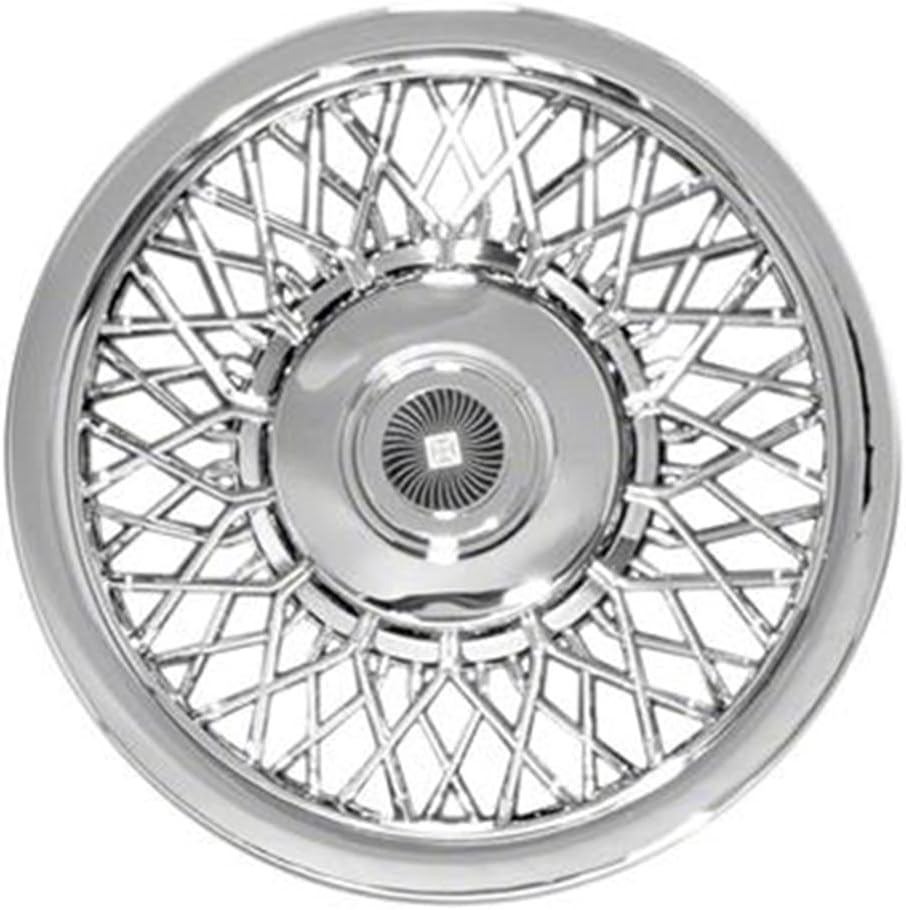
If you’ve landed here wondering what spinning rims even are — welcome. Spinning rims, sometimes called “spinners” or “floaters,” are wheel inserts or full wheels designed so the decorative center keeps rotating (or simply gleams) even after the car stops moving. They became a cultural landmark in custom car and hip-hop circles in the late 1990s and never fully left. Today the conversation has expanded: a lot of show-car builders are asking a sharper question, which is whether to swap the entire wheel or just dress the one they already have. That’s where chrome wheel covers and lace-spoke covers come in. A wheel cover — also called a hubcap overlay or spinner insert — snaps, clips, or bolts onto your existing rim. A lace-spoke cover is a specific style that mimics the tight, radiating wire-spoke pattern associated with classic lowrider and luxury builds. This article is going to walk you through the real tradeoff: full wheel swap versus a quality cover, with actual numbers so you can make the call for your specific build.
The Case For Covers: What the Math Actually Says
Let’s get the cost comparison out of the way, because that’s where most decisions start.
By the numbers (mid-2026 market, set of four):
| Option | Entry Range | Mid Range | Premium Range |
|---|---|---|---|
| Chrome wheel cover set (snap-on/clip) | $20–$80 | $150–$400 | $400–$800 |
| Full aftermarket chrome/billet wheel swap | $600–$1,200 | $1,200–$2,500 | $3,000–$6,000+ |
| Hidden costs on full swap (TPMS, mount/balance, hub rings) | — | $200–$600 typical | $400–$900+ |
That gap is real. Per SEMA’s 2025 Specialty Equipment Market Report, the average completed wheel-and-tire package for a show truck or luxury SUV — once you factor in TPMS sensor reprogramming, a mount-and-balance, hub-centric ring fitment, and freight on a set of heavy billet wheels — lands $300–$600 higher than the sticker price on the wheels themselves. A quality chrome wheel cover set sidesteps almost all of that overhead. No TPMS swap, no hub rings, no freight surcharge on 30-pound forged wheels.
For show-circuit participants who compete in multiple classes or change their car’s look seasonally, covers offer something else: reversibility. You can pull a cover set and go back to your factory wheel in under an hour. Try doing that with a tire-and-wheel package you’ve had mounted and balanced.
Where Covers Actually Win at a Show
This is the part that surprises builders who haven’t spent time ringside at regional car shows. Lowrider Magazine’s show-prep coverage has consistently noted that judges at LOWRIDER Super Show events and regional lowrider competitions evaluate finish quality and fitment — not whether the component is a full wheel or a cover. A lace-spoke chrome cover that’s deep, tight, and properly seated against a clean white-wall or thin-line tire reads exactly the way a full wire wheel does from ten feet. The differentiator is execution, not category.
The specific builds where covers punch above their weight:
Classic and vintage lowriders on stock or period-correct steel wheels. The factory steel wheel on a 1964 Impala or 1972 Cutlass is already the right width and offset. Dropping a correct-diameter chrome lace cover over it, properly centered and pinned, can look indistinguishable from a period Zenith or True Spoke wire wheel to anyone not running a hand along the spokes. Lowrider builders have done this for decades because it preserves the factory wheel’s correct backspacing and avoids the paperwork headache of rolling a car with non-stock wheels through a points-restoration class.
Luxury SUVs going to one or two shows a year. Motor Trend’s aftermarket wheel buyer’s guide makes a point most enthusiasts internalize late: the factory wheel on an Escalade ESV or Navigator L is already a large-diameter alloy with decent finish. Owners who want chrome presence for show season without committing to a full wheel swap — and without voiding any remaining wheel warranty — can run a quality chrome overlay cover for the event and swap back. The economics are obvious.
Budget show builds where the money is going elsewhere. If your build budget is going into suspension, paint, interior, or audio — the categories that typically move the needle most at regional shows — a $200–$400 chrome cover set lets you field a clean wheel presentation without raiding the rest of the budget. Hot Rod Magazine’s chrome-versus-billet breakdown makes this implicit: finish quality on a show car is about consistency across the build, not about maximizing any single component.
Where a Full Wheel Swap Is the Right Call
Covers have a ceiling. If you’re building for serious competition — SEMA-featured builds, national lowrider circuit, or boutique show-truck events where judges get close — experienced fabricators and judges will spot a cover against a true billet or wire wheel. Tire Rack’s fitment guides note that covers introduce a small but real fitment variable: they add material thickness over the face of the wheel, which can affect how flush the profile reads against the fender lip. On a build dialed to a specific stance and fitment, that matters.
Full wheel swaps also win when:
-
You’re running a spinner/floater mechanism. Genuine spinner assemblies — the kind where the center badge or spoke insert keeps spinning after the vehicle stops — are engineered into a full wheel, not retrofitted onto a cover. Brands like DUB and Lexani build the bearing assembly into the wheel’s center bore. A cover can simulate the look of a spinner, but it can’t replicate the actual spinning motion. If the spin is the point, you need the wheel.
-
Your build has specific offset and backspacing targets. A quality full wheel from Giovanna, Lexani, or Wheel Pros is specified to exact offset and backspacing, letting you achieve a particular flush fitment or lip exposure that a cover — which sits on top of your existing wheel — physically cannot replicate.
-
Long-term daily or track use is in the plan. Covers are show tools. Most quality snap-on and clip-type covers are not rated for sustained highway use at speed, and their retention systems aren’t engineered for the lateral loads of aggressive cornering. Tire Rack’s fitment documentation is explicit that hubcap-type covers are appropriate for display and low-speed use, not extended highway driving.
Lace Spoke Specifically: What to Look For
Lace-spoke covers get their own conversation because the quality range is enormous and the fakes are everywhere. The pattern — tight, radiating wire spokes that fan from the center hub to the outer barrel — is labor-intensive to render well in chrome-plated ABS or zinc. Budget versions ($20–$60 per set) cut corners on spoke count, plating depth, and center hub detail. Under show lighting those shortcuts are visible.
Across builder community feedback and aggregated reviews at show-prep retailers, the consistent pattern is that better lace-spoke covers share a few traits: spoke count of 72 or higher (closer to a true wire wheel’s 80–100 spoke count), triple-chrome or deep-dip plating rather than a thin vacuum-chrome finish, and a center hub that matches the vehicle’s hub diameter rather than relying entirely on the outer ring for retention.
Lowrider Magazine’s wheel cover restoration coverage specifically calls out center fitment as the most common failure point: a cover that doesn’t center on the hub will walk and rattle, destroying the illusion. Measure your hub bore before you order. Most passenger car hubs run 57mm–74mm center bore; most American trucks and SUVs run 78mm–87mm. If the cover ships with only an outer retention clip and no center collar, treat that as a red flag.
The Decision Rule: If X, Then Y
If your build is on a stock or period-correct steel wheel, the show class rewards historical accuracy, and you need reversibility for a daily driver, go with a quality lace-spoke or chrome cover set. You’ll spend $200–$400 for mid-tier execution, preserve your factory wheel’s offset and TPMS, and field a wheel presentation that competes cleanly at regional level.
If your build is targeting a full custom stance — specific offset, fender-lip fitment, or a genuine spinning center mechanism — the full wheel swap is unavoidable. Budget for the hidden costs up front: TPMS reprogramming (typically $50–$80 per sensor at a specialty shop), hub rings if your wheel’s center bore doesn’t match the vehicle’s hub exactly ($15–$40 per wheel), and mount-and-balance ($25–$60 per wheel). For a set of four at mid-tier pricing, that’s a realistic $300–$500 above wheel sticker.
If you’re building for national-circuit competition or a SEMA-level feature build, covers are a staging tool at best. Allocate for billet or true wire wheels and treat the show-prep detail work — polishing, centering, lug presentation — as the variable that separates a regional win from a national one.
The honest middle case: a lot of builders run covers on a secondary show vehicle or a car they’re still developing, bank the wheel-swap budget, and make the full upgrade when the rest of the build justifies the investment. That’s not a compromise — that’s resource allocation. The car-show circuit runs on both, and judges who’ve seen thousands of builds have respect for a clean, properly fitted cover executed well over a premium wheel installed carelessly.
Published May 2026. Pricing ranges reflect mid-2026 market conditions for the U.S. aftermarket. Always verify fitment specifications — bolt pattern, center bore, and hub diameter — against your vehicle’s specific year, make, and trim before ordering any wheel cover or full wheel package.