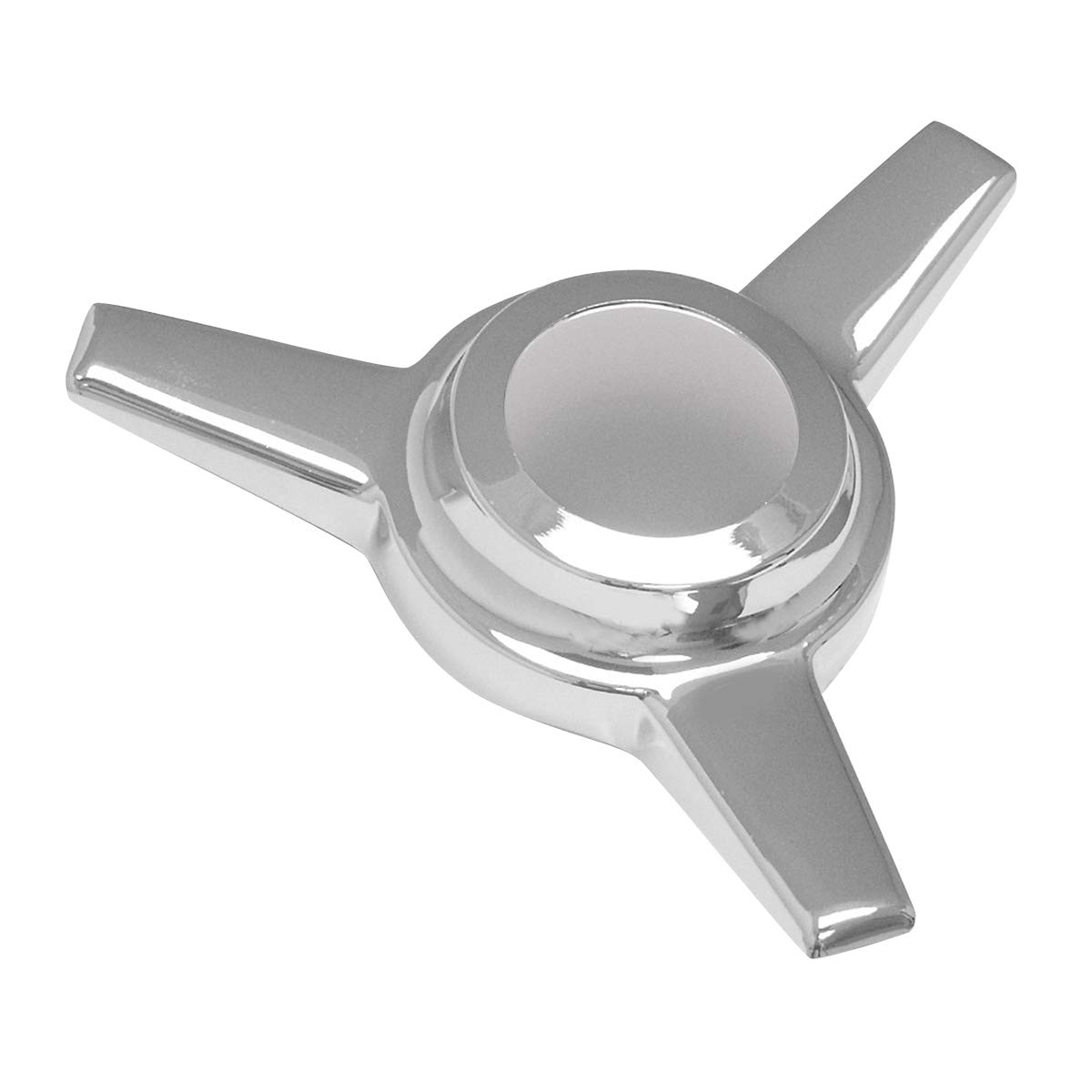
If you’ve ever searched for “spinning rims” and ended up more confused than when you started, you’re not alone. The listings blur together fast: some products say “spinner hubcap,” others say “floater wheel,” and a handful say both. Here’s the plain-English version before we go deeper. A spinner hubcap is a decorative cover — a cap or insert — that snaps over your existing wheel and has a center piece engineered to keep spinning (by bearing or free-rotation) even after the car stops. A true floater, also called a floating center cap wheel, is a purpose-built wheel where the outer barrel and tire rotate normally with the car, but the center medallion or face is mounted on a separate bearing system so it appears to “float” stationary — or even spin backward — relative to the moving wheel. Both look like spinning rims when they’re rolling. But they are fundamentally different products at different price points, with different install complexity, different durability profiles, and different risk profiles if you buy wrong. This article maps out exactly where the line is, what the listings hide, and how to make the call for your specific build.
The Mechanical Split: Why It Matters More Than the Marketing Photo
The visual effect looks identical in a YouTube clip. Where things diverge is in how the spinning motion is achieved and what supports it.
A spinner hubcap relies on a passive bearing or free-spinning sleeve mounted inside the cap itself. The cap clips, bolts, or presses onto your existing wheel — which can be a stock wheel, a budget aftermarket steel wheel, or an alloy. The center piece is weighted or balanced so that inertia keeps it spinning after the vehicle decelerates. That’s the whole mechanism. It’s elegant in its simplicity and genuinely clever engineering at the $20–$150 price tier. Owners consistently report that entry-level sets from generic import brands deliver the visual effect reliably for show use or neighborhood driving, but bearing longevity degrades noticeably past 12–18 months of daily driving, particularly in climates with road salt or debris. Super Street Online’s show wheel buyer’s guide identifies bearing corrosion on unsealed spinner caps as the single most common failure mode across the mid-range segment — a pattern that repeats regardless of price point once the bearing housing is exposed to road moisture.
A true floater wheel is a different animal. The wheel itself — barrel, spokes, and tire mounting surface — is a single structural unit that bolts to your hub normally. The center section (the face or medallion you see) is isolated from that rotating structure by a precision bearing assembly, often a sealed angular contact or deep-groove ball bearing, machined into the wheel’s center hub. The result: the wheel rotates, the center does not (or rotates at a different rate). Hot Rod Magazine’s feature “Spinner Comeback: What Builders Are Running in 2025” noted that the premium floater market has consolidated around billet-machined designs specifically because cast centers couldn’t maintain the bearing seat tolerances needed for long-term smooth operation at highway speeds.
The short version: a spinner hubcap is an accessory; a true floater is the wheel.
What the Product Listings Actively Obscure
If you’ve spent time on boutique fabricator sites or large aftermarket retail platforms, you’ve noticed that listing language is ambitious. Here are the four things you’ll almost never see disclosed upfront:
1. Bearing type and serviceability. Entry hubcap sets rarely name the bearing spec. “High-speed precision bearing” is marketing copy; what you want to know is whether the bearing is sealed, whether replacement bearings are available, and what the inner and outer diameter specs are so you can source replacements independently. Tire Rack’s Wheel Fitment Guide and Hub Ring Technical Reference makes the broader point that unsealed or generic bearing specs on accessory-grade products are the first point of failure in wet-road environments — and that logic applies directly to spinner cap bearings.
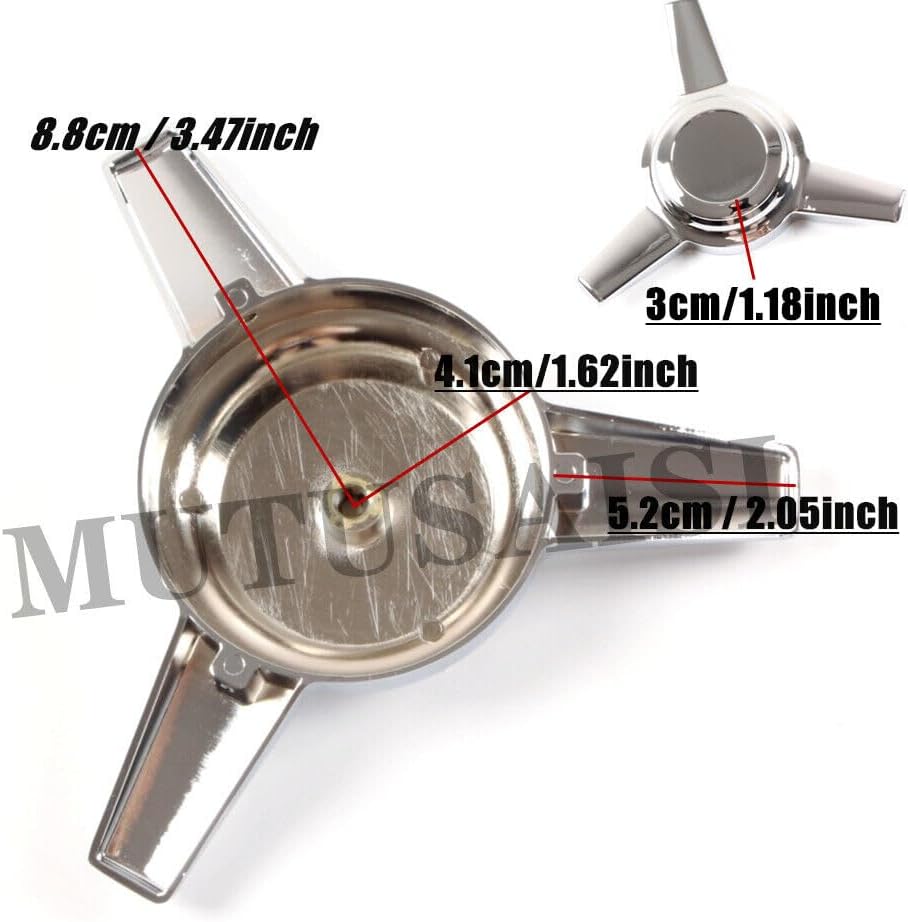
2. Whether the product is universal-fit or hub-bore specific. Spinner hubcaps are often sold as universal by diameter (14”, 15”, 17”, etc.) with a clip system. True floaters must match your bolt pattern and hub bore exactly, the same as any structural wheel. SEMA’s 2025 Market Report on Custom Wheel Accessories found that improper hub bore fitment remains the leading cause of vibration complaints in the floater segment — a problem that simply doesn’t exist with a clip-on cap but becomes critical on a true floater running at speed.
3. TPMS compatibility. If your vehicle uses a TPMS system (Tire Pressure Monitoring System), a spinner hubcap usually doesn’t interfere because it mounts over the existing wheel without touching the valve stem system. A true floater wheel means you’re mounting new wheels, which typically means either reusing OEM TPMS sensors (if the design accommodates them) or purchasing compatible aftermarket sensors. In 2026, aftermarket TPMS sensors run $40–$90 per corner plus programming time — that’s $160–$360 you won’t see reflected in the wheel listing price.
4. Install complexity and liability. A hubcap set, in most cases, is a driveway install. A true floater wheel set requires a full wheel swap, torque spec compliance, potential hub ring fitment, TPMS programming, and a post-install road test. If you’re sourcing for a client build, this is labor you need to price in — and liability you need to own.
By the Numbers: Cost Reality Check
Understanding the true all-in cost separates informed buyers from people who get surprised at the shop counter.
H3: Budget Entry — Spinner Hubcap Set
Spinner hubcaps sit at the accessible end of this category for a reason. The product cost runs $20–$150 for a set of four. Install is DIY in most driveways — no lift required, no torque wrench needed beyond the clip or bolt system the cap uses. TPMS is unaffected. Hub rings are not applicable. Your realistic all-in cost is $20–$150, full stop.
The tradeoff is durability ceiling. At this price tier, the bearing is the weak link. Builds that live outdoors year-round in salt climates will see bearing degradation faster than the same cap on a show car that gets garage storage. Buy accordingly.
 product image](/images/external/aecb964075fd.jpg)
Speedway
$31.99
In stock on Amazon
Check price on AmazonH3: Mid-Tier — True Floater Wheel Set (Production Line)
This is where sticker shock lives. Production floater sets from established brands in the aftermarket wheel space run $800–$2,000 for the wheels themselves. Add $80–$200 in shop labor for a proper wheel swap with torque verification, $160–$360 for TPMS sensors and programming, and $20–$60 for hub rings if your vehicle requires them for hub-centric fitment. Your realistic all-in cost lands at $1,060–$2,620.
Lowrider Magazine’s floater tech coverage on spinner builds notes that separating the spinner effect from the structural wheel — as floater designs do — gives builders a more durable daily-driver option than clip-on caps, but only when the bearing seat is properly machined and the install is done to spec. A mid-tier floater installed sloppily performs worse than a quality hubcap cap installed correctly.
4PCS
$72.99
In stock on Amazon
Check price on AmazonH3: Premium Tier — Billet or Custom Floater Set
At the top of the market, you’re commissioning a wheel, not buying one off a shelf. Billet-machined floater sets run $2,000–$5,000 or more depending on diameter, finish, and center design complexity. Shop labor runs $150–$400 for the install. TPMS adds $160–$360. Hub rings are often included or machined to spec by the fabricator. Your realistic all-in cost is $2,310–$5,820 and up.
Hot Rod Magazine’s 2025 spinner comeback feature found that this tier is where the bearing seat tolerances actually justify the cost — billet centers hold dimensional accuracy through the full service life of the wheel in ways that cast centers cannot. For competition-level builds or high-visibility luxury SUV projects, the premium tier is the only tier where close-range scrutiny won’t reveal shortcuts.
2
$220.00
In stock on Amazon
Check price on AmazonWhere Each Product Actually Wins
This is where a lot of buyer guides get vague because they don’t want to talk anyone out of a purchase. We’ll be direct.
Spinner hubcaps win when:
- You’re building a show car or feature vehicle where the wheels will roll slowly or be stationary 90% of the time. Lowrider Magazine’s coverage of the show-build community documents a consistent pattern: experienced builders run quality spinner cap sets over structural wheels specifically because the cap can be swapped, upgraded, or replaced without touching the wheel. The spinner effect is separated from the wheel investment.
- Your budget is under $500 all-in and you want a credible visual effect without the complexity of a full wheel swap.
- You’re fitting a vehicle with a non-standard bolt pattern where floater options are limited or custom-only.
- You want reversibility. A hubcap comes off cleanly. A floater wheel commitment is a commitment.
True floaters win when:
- You are building a competition-level or high-visibility show truck or luxury SUV where the visual quality of the center piece will be scrutinized at close range. At three feet, the difference between a premium billet floater center and a spinner cap is apparent to experienced judges and detailers.
- You want the effect to work at highway speed without vibration risk. A well-specified floater wheel runs on a properly engineered bearing seat. A clip-on cap at 75 mph depends entirely on how well it was seated on install — and on how intact that bearing remains after months of road exposure.
- Your client or your build demands a cohesive, bespoke look where the floater face is custom-machined to match the wheel design. This is the $2,000–$5,000 custom fabrication tier, and it cannot be approximated with a cap.
- You’re building on a full-size luxury SUV platform where hub bore and offset tolerances are tight and hub-centric fitment is non-negotiable for both safety and ride quality. Tire Rack’s Wheel Fitment Guide and Hub Ring Technical Reference is explicit on this point: large-vehicle floater builds require hub-centric rings and matched bore specs — this is not optional.
The Counterfeit and Replica Exposure Point
One thing the listings really won’t tell you: the mid-range floater space — roughly $200–$800, the “branded floater assembly” tier — has significant counterfeit exposure. Products sold under names that sound adjacent to established premium wheel brands appear regularly through gray-market channels. The tells are consistent: no bearing spec disclosed, no hub bore listed, generic packaging, and prices that undercut the brand’s minimum advertised price by 30% or more.
SEMA’s 2025 Market Report on Custom Wheel Accessories flags replica wheel covers and floater assemblies as a growing category of consumer complaints — specifically because buyers don’t discover the quality gap until the bearing fails or the chrome delaminates. If a floater listing looks like a premium product at a hubcap price, treat that as a verification signal. Confirm authorized dealer status directly with the brand before purchasing.
The Decision Rule
Here’s the “if X, then Y” framework to carry into your current build:
- If the vehicle drives regularly and you want zero added maintenance complexity → spinner hubcap on quality structural wheels, budget $80–$150 for a set worth owning.
- If it’s a show-only or limited-mile build and visual effect is the goal → spinner hubcap delivers equivalent show-floor impact at a fraction of the floater cost, with flexibility that a floater can’t match.
- If you’re building for competition judging, a high-visibility client vehicle, or a luxury SUV platform where close-range scrutiny is expected → true floater, properly specified, properly installed, with TPMS and hub rings budgeted from the start.
- If a listing seems to offer floater-quality visuals at hubcap pricing → treat it as a counterfeit signal and verify the seller’s authorized status before you buy.
The product listings will show you the same glamour shot regardless of which category the product actually belongs to. Your job is to read past the photo to the mechanism, the fitment spec, and the total installed cost. Once you’re doing that, the choice between these two products becomes straightforward — and the one that fits your build will be obvious.